

SaaS content marketing is the strategy of software-as-a-service businesses creating and sharing relevant content that educates their target audience throughout the sales cycle. It can include blog posts, white papers, tutorials, case studies, and more.
Nearly 85% of SaaS buyers self-educate as much as possible when evaluating software solutions.
That means throughout the sales funnel, prospective subscribers search for valuable content to guide their decisions.
For SaaS brands, investing in high-quality content marketing is essential to build trust among decision-makers and retain existing customers.
This guide outlines the key components of content marketing for SaaS businesses that will drive more qualified organic search traffic, shorten the sales cycle, and maintain long-term relationships with your subscribers.
What is SaaS content marketing?
SaaS content marketing is the digital marketing strategy of creating and distributing helpful content to attract, convert, and retain customers for subscription-based software products.
Types of content for SaaS
Saas content types include written, visual, and audio content, such as:
- Blogs
- White papers
- Case studies
- Video content
- How-tos and tutorials
- Product workflows and education
- Templates
- Webinars
- Podcasts
- Infographics
- Tool comparisons
Why content marketing is important for SaaS businesses
Content marketing helps SaaS businesses attract qualified traffic, build trust, and drive scalable, long-term growth by educating users at every stage of the funnel.
Here’s how content marketing benefits Saas:
- Provides value to a self-educating audience: SaaS customers spend time evaluating their software options, so providing robust digital content makes them more likely to turn to your product
- Earns authority and trust: Providing valuable information shows you’re a trustworthy brand
- Improves visibility and search rankings: Keyword-optimized content improves the chances of your website showing up in search results and bringing in more visitors
- Brings in qualified leads: People who find your content useful are more likely to sign up or inquire about your product
- Guides potential customers: When your content answers questions and addresses concerns, it guides potential customers toward buying
- Improves retention rates: Providing useful post-purchase content keeps subscribers engaged and interested in sticking with your product
- Establishes thought leadership: Content marketing allows you to publish original insights that set you apart from other brands — and earn your place as an industry leader
How to create a SaaS content marketing strategy
Follow these steps to create a SaaS content marketing strategy:
- Build buyer personas
- Define business goals and set OKRs
- Map out the customer journey
- Do competitive analysis
- Conduct keyword research
- Assign content topics to appropriate formats
- Create a content calendar
- Optimize your website
- Publish high-quality content
- Distribute content
- Track important metrics
1. Build buyer personas
Buyer personas are fictional characters that portray your ideal customers based on data and some educated guesses about their demographics, behavior patterns, motivations, and goals.
Here’s how it may look:
(Image: HawkSEM)
Creating buyer personas helps you understand who you’re talking to, so you can tailor your content to address their specific problems, needs, and questions.
To build a buyer persona:
- Gather data from customer interviews, surveys, and your website analytics
- Look for patterns in how customers find and use your product
- Identify their goals, challenges, and the type of content they engage with
- Use this information to create a comprehensive profile that represents a segment of your audience.
Further reading: How to Create Your Ideal Client Persona
2. Define business goals and set OKRs
Your goals are the broad outcomes you want to achieve with your content marketing, like increasing brand awareness or driving more sales.
Without clear goals, you can’t measure success or understand the impact/ROI of your inbound marketing efforts.
OKRs (Objectives and Key Results) help you set specific, measurable steps to reach these goals. They keep you focused, ensuring every piece of content has a purpose and contributes to your broader business objectives.
Start by identifying what you want your content marketing to achieve.
Then, set objectives that are specific, measurable, achievable, relevant, and time-bound (SMART).
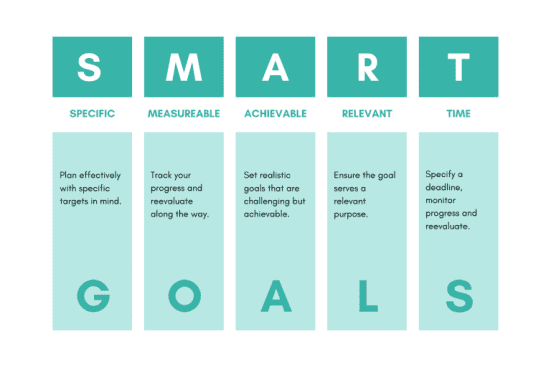
(Image: HawkSEM)
For each objective, define key results that’ll indicate progress toward that objective.
For example, if your objective is to establish your brand as a thought leader in your industry, a key result could be to increase your website’s organic traffic by 50% in the next quarter.
3. Map out the customer journey
The customer journey is people’s path from realizing they have a problem to choosing your solution.
Understanding this journey helps you create content that meets potential customers at every stage, addressing their needs and moving them closer to a purchase.
It ensures you’re not just creating content for the sake of it but making content that solves problems, educates, and builds trust.
Break down the buyer’s journey into stages: awareness, consideration, and decision.
Identify the questions and concerns your customers have at each stage. Then, plan content that answers these questions.
- Awareness: Focus on informational content that addresses the problem
- Consideration: Show why your solution is the best
- Decision: Provide proof points like case studies or testimonials
4. Do competitive analysis
A competitor analysis is the process of evaluating rival companies’ content, keywords, and strategies to understand what works in your industry and where there may be gaps you can leverage.
Start with a list of your top competitors and visit their websites, blogs, and social media profiles. Take note of:
- The types of content they produce (blogs, videos, podcasts, infographics)
- The topics they cover and their approach to those topics
- The engagement level with their content (likes, shares, comments)
- Where they rank on the SERP
- Any content formats or topics that seem underexplored
Competitor analysis tools
Using BuzzSumo, you can enter a competitor’s website to see its most shared content. This gives you an idea of what topics resonate with its (and potentially your) audience.
Semrush, Ahrefs, or Hubspot can show the keywords it ranks for, indicating the SEO (search engine optimization) strategies it’s employing.
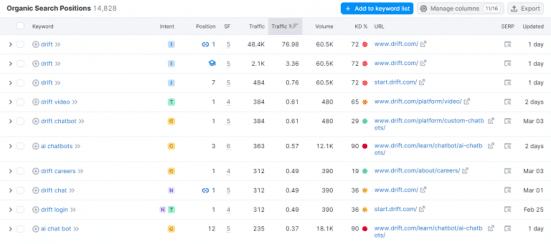
(Image: Screenshot)
If your competitor ranks well for certain keywords but lacks comprehensive content on those topics, that’s your cue to create in-depth content to fill that void.
Further reading: How to Conduct an SEO Competitor Analysis + 10 Tools We Love
5. Conduct keyword research
Keyword research helps you understand the search terms potential customers use to find topics related to your SaaS product.
This process ensures the content you create matches what people are searching for, making it easier for them to find your website.
Start by thinking about the basic topics related to your product and industry. Use Google Keyword Planner, Semrush, Ahrefs, or other keyword research tools to discover the specific keywords and phrases within those topics.
Pick keywords with a high search volume and low competition. This means many people are searching for these terms, but there aren’t many quality resources answering their questions.
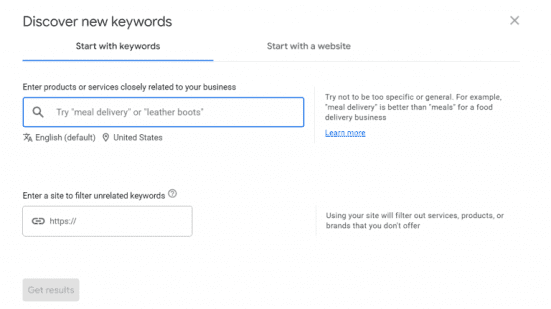
(Image: Screenshot)
Further reading: 7 SaaS SEO Tips That Actually Work (+ What to Avoid)
6. Assign content topics to appropriate formats
Once you have a list of keywords, determine which content formats would be the most effective to educate your audience on that topic.
Here are some examples of content types organized by search intent:
- Top-funnel queries: Blogs, podcasts, infographics, and explainer videos
- Mid-funnel queries: Use case studies, how-to guides, comparison pages, webinars, and product-led blog posts
- Bottom-funnel queries: Landing pages, product demos, FAQs, and ROI tools and calculators
7. Create a content calendar
A content calendar is your roadmap for what content you’ll publish, when, and where. It helps you stay organized, plan for key dates or events, and ensure a consistent content flow to keep your audience engaged.
To create a content calendar, first decide on the frequency of your posts — whether daily, weekly, or monthly.
Then, map out specific topics or types of content for each publication date.
Consider seasonal topics, product updates and launches, or industry events that may influence what you should publish and when.
Don’t forget to refresh old content and repurpose for maximum efficacy.
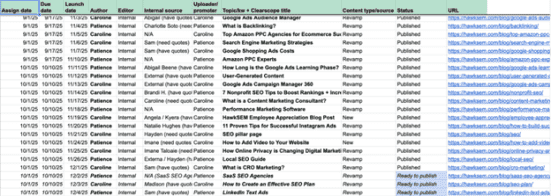
(Image: HawkSEM content calendar screenshot)
You can use Google Sheets, Asana, or other tools to organize your calendar.
Include columns for the content title, keywords, target persona, CTA, stage of the customer journey, and the responsible team member.
This keeps everyone on the same page and makes it easier to track progress.
Further reading: What Is a Content Calendar? (+ How to Create One)
8. Optimize your website
Website optimization means ensuring your web pages are designed, written, and coded to perform well on the SERPs and AI-powered search.
This includes using your researched keywords effectively across your site’s content, improving site speed, ensuring mobile-friendliness, and creating an intuitive navigation structure.
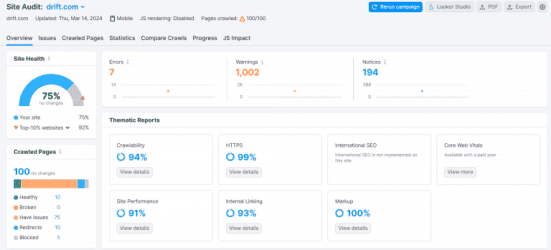
Start with an SEO audit using tools like Semrush or Moz to identify areas for improvement.
(Image: Semrush screenshot)
Look for broken links, slow-loading pages, and content not optimized for your target keywords.
Next, make your website mobile-friendly. More people now use their phones to search and browse the web, so your site should look good and work well on a smaller screen.
Finally, enhance your site’s user experience (UX) by organizing your content in a clear, easy-to-follow way.
A well-structured site with a logical hierarchy helps your SEO and answer engine optimization (AEO) and makes it easier for visitors to find the information they need and take action, such as signing up for a trial or purchasing.
To optimize for AI and answer engines, follow these SEO best practices as well as folding in direct answers to questions and natural language.
Of course, optimizing your SaaS website involves a lot more. Check out 6 Ways to Optimize Your SaaS Website.
Additionally, you need to take several other on-page and technical SEO steps to get better results. We have published separate guides on both topics.
Check them out:
9. Publish high-quality content
Using the content calendar you created as your guide, dedicate time and resources to creating great content.
If you have an in-house team of writers, build a robust workflow that streamlines everything from research and content writing to editing and publishing.
Or consider working with freelance writers or content marketing agencies.
Look for writers who understand your industry and can match your brand’s tone. Clear communication about your expectations, deadlines, and feedback is key to a productive relationship.
Regular check-ins and constructive feedback will help maintain quality and alignment with your brand’s values.
“For SaaS content marketing, a writer who understands your product and industry is non-negotiable,” says Rambod Yadegar, co-founder and president of HawkSEM.
“In fact, investing in the right writing talent is one of the most critical decisions you’ll make in your SaaS content strategy.”
He adds that SaaS products solve complex problems. So, your content should clearly communicate your value proposition and address customer pain points.
“An experienced writer can create content that resonates, builds trust, and boosts lead generation by translating complex topics into engaging, accessible stories,” he says.
10. Distribute content
Strategically distributing your content maximizes its visibility and impact. It also helps you engage your audience, driving brand awareness.
To create a content distribution strategy, identify the most effective channels for your target audience. This may include specific social media platforms, email marketing newsletters, and industry forums.
Tailor your message for each marketing channel — short and intriguing for X, detailed and professional for LinkedIn.
Schedule your posts at the right times when your audience is most active.
Also, prioritize engaging with comments and social shares to foster community and increase reach. Tools like Buffer or Hootsuite can streamline this process and provide analytics to refine your strategy over time.
11. Track important metrics
Measuring key metrics allows you to understand the effectiveness of your content marketing and make data-driven decisions.
Focus on key performance indicators (KPIs) that fit your business goals, such as traffic, engagement, leads, click-through rate, and conversion rates.
Use Google Analytics to assess website activity and social media analytics for engagement trends.
Review these metrics regularly to identify which types of content work best with your audience and adjust your content strategy accordingly.
Setting up dashboards or reports for monthly reviews will help keep track of progress and trends.
How to integrate SaaS content marketing and sales
Integrating SaaS content marketing and sales ensures your content efforts convert into actual revenue.
Your sales and content marketing teams need to collaborate closely to achieve this. Start by sharing insights and data between teams.
For instance, content marketers can inform sales teams about the types of content generating the most leads, while sales teams can provide feedback on what customers are asking for during the sales process.
Implement content ideas that support the entire sales cycle, from awareness to decision.
Create case studies, testimonials, and detailed product guides that sales can use to address potential customers’ concerns and questions.
Also, use content to nurture leads by providing information that guides them through the buying journey. This makes it easier for sales to close the deal.
Regular meetings between content marketing and sales ensure that both teams are aligned on goals, messaging, and target audiences.
This alignment means content marketing directly supports sales efforts, leading to a smoother customer journey and impacting the bottom line.
How much does SaaS content marketing cost?
On average, you can expect to spend between $5,000 and $20,000 per month. The cost of SaaS content marketing depends on the stage of your site (startup or established) and whether you need ongoing content production.
The rate will depend on the type of content you’re creating, the length and research required for each piece of content, and how many pieces you need monthly.
When to hire a SaaS content marketing agency
For SaaS companies that don’t have the resources to support their content marketing efforts, hiring an agency can be the right decision.
Partnering with a SaaS content marketing services provider can:
- Offer expert insights tailored to your unique market position
- Save time and resources
- Provide access to specialized marketing tools and analytics
- Enhance content quality
- Accelerate your sales cycle
- Scale your content production
- Ensure prospects and customers are nurtured at every stage of the marketing funnel
“Creating an effective SaaS content strategy requires a shift from just pushing product features and publishing content blindly. It’s much more strategic,” says Yadegar.
“This is where working with a SaaS content marketing services provider could be a better choice for many brands.”
The takeaway
“B2B SaaS content marketing is more than just about attracting eyeballs. It’s about fostering meaningful relationships with your target audience,” says Yadegar.
“At a time when customers are flooded with generic marketing messages, authentic content is the key to cutting through the noise and establishing your brand as a trusted advisor.”
From top to bottom of the funnel and beyond, creating valuable SEO content and assets can set your SaaS brand apart.
Need help with your strategy or content creation? Get in touch with HawkSEM today.
This article has been updated and was originally published in May 2024.
Berita Terkini
Berita Terbaru
Daftar Terbaru
News
Berita Terbaru
Flash News
RuangJP
Pemilu
Berita Terkini
Prediksi Bola
Technology
Otomotif
Berita Terbaru
Teknologi
Berita terkini
Berita Pemilu
Berita Teknologi
Hiburan
master Slote
Berita Terkini
Pendidikan
Togel Deposit Pulsa
Daftar Judi Slot Online Terpercaya
Slot yang lagi gacor


