

Your revenue targets keep climbing, but your team size stays the same.
If you’re managing affiliates, influencers, or B2B partners, you already know the math doesn’t work. You can’t hit aggressive growth goals while manually vetting partners, chasing down reports, and processing payments one by one.
Here’s the reality: 43 percent of program managers say their team is too small for the workload. You’re not imagining it. Manual processes are capping your growth. This is the classic resource trap: you’re forced to sacrifice strategy just to keep up with admin.
The answer isn’t hiring more people. It’s building systems that work for you.
This guide shows you how to set up automation that handles the repetitive work—so you can spend your time on the stuff that actually grows your program. If you’re ready to stop playing catch-up, here’s how to turn limited resources into your biggest advantage.
The manual management trap
Manual management might feel like you have control. You don’t. Spreadsheets and manual tracking aren’t sustainable when you’re trying to compete and grow. Here are the challenges that prove manual management is a trap.
Time drain: Manual processes eat up a huge amount of your team’s productive time. This prevents your team from focusing on important growth work.
Revenue leakage: Manual tracking mistakes cause significant problems because they misallocate credit for sales. This issue is common because most companies lack the tools to prove where their marketing money is working.
Partner frustration: Your partners can get frustrated when they don’t get enough support from affiliate managers. They also worry about fraud, which better systems could prevent.
Missed opportunities: While you’re stuck managing administrative tasks, competitors with automated systems are capturing market share.
The automation advantage
Moving past manual processes isn’t just about cutting admin time. It’s about changing how your program works by making it reliable and scalable. Automation lets you shift resources away from repetitive tasks and put them directly into high-impact strategy. Here’s what that looks like:
Time recapture
Automation instantly handles repeatable tasks. This removes admin hurdles and saves your team’s time . Instead of compiling data or sending standard emails, the system does it for you. This frees up hours your team needs for work that matters. They can focus on new campaigns, negotiating with top partners, or exploring new markets. When you automate, you save time for truly important work.

Quality growth
You can grow your partner network without adding staff. Automation uses data to help you discover new, high-potential partners you won’t find manually. The system also automates screening and onboarding. You can quickly vet and activate partners at scale. This means your program expands fast while maintaining quality.
Revenue protection
Automation solves the two biggest threats to your profit: errors and fraud. It makes sure partner commissions are calculated and paid instantly and accurately every time. This eliminates human error and stops you from losing money.

Automated security also continuously monitors for suspicious activities. Think click fraud or unauthorized code usage. This approach safeguards your budget and protects your brand’s reputation as you grow.
Scrambly’s quality transformation: From manual chaos to automated precision
The challenge: Scrambly’s affiliate program was managed by a single person using spreadsheets and manual processes. This reliance on makeshift tools led to weekly reporting taking three hours, resulting in tracking gaps, attribution errors, and stalled partner growth, with only 15 active partners. The manager was stuck being an administrator.
The solution: Scrambly migrated to impact.com to centralize operations and streamline low-touch processes. They implemented:
- Real-time reporting: Eliminating the need to compile data across multiple sources.
- Automated recruitment: Using the Marketplace and Discover tools to find and onboard partners at scale.
- Precision tracking: Deploying cookieless tracking, automated payments, and dynamic payouts.
The results:
- 160 percent increase in revenue in just three months.
- 567 percent partner growth (from 15 to over 100 active partners).
- Weekly reporting time cut from 3 hours to 30 minutes.
- 120 percent ROAS lift through placement-level optimization.
- 45 percent reduction in partner churn.
Automation enabled Scrambly’s manager to eliminate the need for manual spreadsheet reconciliation and troubleshooting of links. Instead, they focused on strategic growth: expanding into new international markets, testing commission structures, and building performance tiers. They achieved enterprise-level results with a team of one.

Scrambly achieves 160 percent revenue growth with automation
Discover how Scrambly used impact.com’s automation tools to streamline partnership management.
Read case study
Automation framework for partnership programs
Moving your program from manual tasks to a strategic approach requires focus. Performance managers often face challenges that limit growth. Automation isn’t a single solution that works for everyone. You need to tailor your strategy to your program’s maturity and budget. This framework shows you exactly what to prioritize at the early, growth, and established stages, based on common pain points.
Assess your maturity stage
Before diving into features, you should determine your current position. The right automation choice depends entirely on your current program size and the complexity of your needs. Here’s what each stage means for you:
| Maturity level | What this means for you | Your biggest pain point | Your goal |
| Early stage (0 – 50 partners) | You’re building the basic foundation, and you’re very cost-conscious. You need core tools to simply function—tracking and payments. | Manually vetting partners and wasting time on low-level admin. You can’t justify a huge budget yet. | Achieve foundational automation and a quick Return on Investment (ROI). |
| Growing stage (50 – 500 partners) | You’ve found initial success, and you’re ready to scale fast. You need to eliminate bottlenecks to continue growing without hiring additional staff. | Your manual processes are starting to break down. You’re struggling with relationship management, duplicate outreach, and complex financial tasks. | Implement strategic tools to manage the high volume of partners and run smoothly. |
| Established stage (500+ partners) | You’re an enterprise program focused on complexity and global operations. You manage diverse partner types. | Optimizing for true incrementality, managing global compliance, and preventing sophisticated fraud. | Leverage advanced tools like AI and dynamic commissions to handle complexity and drive maximum profit. |
Addressing key bottlenecks with automation
You know your stage. Now, you need to address the core challenges that are preventing your program from growing. The following five bottlenecks are the most common ceilings for partnership program growth globally. For each problem, you’ll find a targeted automation plan based on your maturity stage.
1. The partner discovery bottleneck: “I can’t find enough quality partners.”
Manual partner search is time-consuming and often based on guesswork. You need high-potential collaborators to hit growth targets, but vetting prospects one by one keeps your program small.
How automation fixes it: Set up a clear system for finding partners. Look past the obvious choices and use data-driven tools to match you with the right fit. This lets your program grow steadily to hundreds of partners.
| Maturity level | Core automation action |
|---|---|
| Early stage (0–50 partners) |
Use a platform’s pre-vetted network to minimize partner vetting time while maintaining quality. |
| Growing (50–500 partners) |
Set up a recruitment command center to eliminate duplicate outreach and manage all follow-ups from a central dashboard. |
| Established (500+ partners) |
Use AI that analyzes your program’s performance data to recommend high-probability matches, reducing guesswork and manual research. AI is now used by 97 percent of brands in their affiliate strategy—smart partner identification is the new baseline. |
2. The financial and legal operational drag: “Contracts, commission, and pay are consuming my time.”
Manual commission calculations, invoicing, multi-currency payments, and creating individual contracts are error-prone. They delay partner activation and damage relationships. This overhead becomes a huge liability as you scale internationally.

How automation fixes it: Streamline the entire financial and legal workflow, eliminating human error. Handle tax compliance across all regions and guarantee partners get paid accurately and on time, every time.
| Maturity level | Core automation action |
|---|---|
| Early stage (0–50 partners) |
Use customizable templates and branded links to create consistent, professional contracts instantly and speed up partner activation. |
| Growing (50–500 partners) |
Eliminate manual commission calculations and invoicing with a system that automatically processes payments across various methods and tax jurisdictions. |
| Established (500+ partners) |
Set up tiered commission models based on granular performance (new vs. existing customers) and manage custom agreements without manual tracking. |
3. The relationship management drain: “It’s hard to engage and motivate my partners.”
When you’re managing hundreds of partners, engagement slips. Communication becomes generic. Partner churn goes up. Manually tracking who’s active and who needs attention doesn’t scale.
How automation fixes it: Automation handles the heavy lifting of partnership management—consistent communication, behavior tracking, and delivering the right messages and content at the right time. Your team focuses on building high-value, strategic relationships.
| Maturity level | Core automation action |
|---|---|
| Early stage (0–50 partners) |
Set up centralized and consistent communication channels for quick support and updates, improving the partner experience immediately. |
| Growing (50–500 partners) |
Replace ad-hoc outreach with triggered email sequences based on partner actions or inactivity to maintain regular contact without manual effort. |
| Established (500+ partners) |
Use analytics to identify inactive partners and automatically deploy re-engagement campaigns and personalized messaging to boost retention and revitalize dormant relationships. |
4. The visibility problem: “I can’t prove ROI to leadership.”
When data is scattered across multiple platforms with conflicting attribution models, you can’t get the clear, actionable insights you need. You can’t justify program investments or spot optimization opportunities. This creates a “credibility gap” where your program’s success stays hidden from leadership.

How automation fixes it: Build accurate tracking as your foundation, then centralize real-time reporting. Use reliable data to guide strategic decisions and clearly show your program’s true value and ROI.
| Maturity level | Core automation action |
|---|---|
| Early stage (0–50 partners) |
Set up advanced tracking (API or cookieless) to guarantee reliable conversion attribution. This is your foundation for all metrics. |
| Growing (50–500 partners) |
Centralize analytics covering clicks, actions, and revenue so you can show program performance objectively to stakeholders. |
| Established (500+ partners) |
Build tailored reports to answer specific business questions and use optimization tools to understand partner contribution and true incrementality. |
5. The protection imperative: “I’m worried about compliance and fraud.”
As your program scales, compliance risks multiply fast. Fraudulent activity and trademark violations (like partners bidding on your brand name in paid search) can quickly damage your reputation and create legal issues.
How automation fixes it: Set up proactive monitoring to catch and prevent costly violations across channels. Scale your program with confidence, protecting both your profits and reputation.
| Maturity level | Core automation action |
|---|---|
| Early stage (0–50 partners) |
Turn on click fraud detection, suspicious activity alerts, and partner verification to safeguard budgets and maintain data integrity. |
| Growing (50–500 partners) |
Automatically monitor search engines for partners bidding on your trademarks and prevent unauthorized distribution of promo codes to protect profit margins. |
| Established (500+ partners) |
Automate scanning of partner sites to preserve brand safety and set up routing rules to block non-compliant traffic before it reaches your offers. |
Technology evaluation criteria: Selecting the right platform and tools for automation
Once you recognize the need for automation, the next step is choosing the right platform. You now understand the five core challenges facing growing programs. The next step is evaluating technology against three key pillars: features, integration, and implementation.
1. What key features should I look for when investing in performance marketing automation tools for lead generation and sales?
This checklist goes beyond basics to organize features by program maturity. Invest in tools that match your immediate needs and future growth goals.
Must-haves (non-negotiable for any automation platform)
These are baseline requirements that every platform should meet, regardless of your program size or stage:
✅ Accurate tracking and attribution
- Real-time conversion tracking
- Multiple attribution models (first-click, last-click, multi-touch)
- Cross-device tracking capabilities
- API integrations with your existing tech stack
Why it’s critical: Without accurate tracking, you can’t pay partners correctly or measure ROI
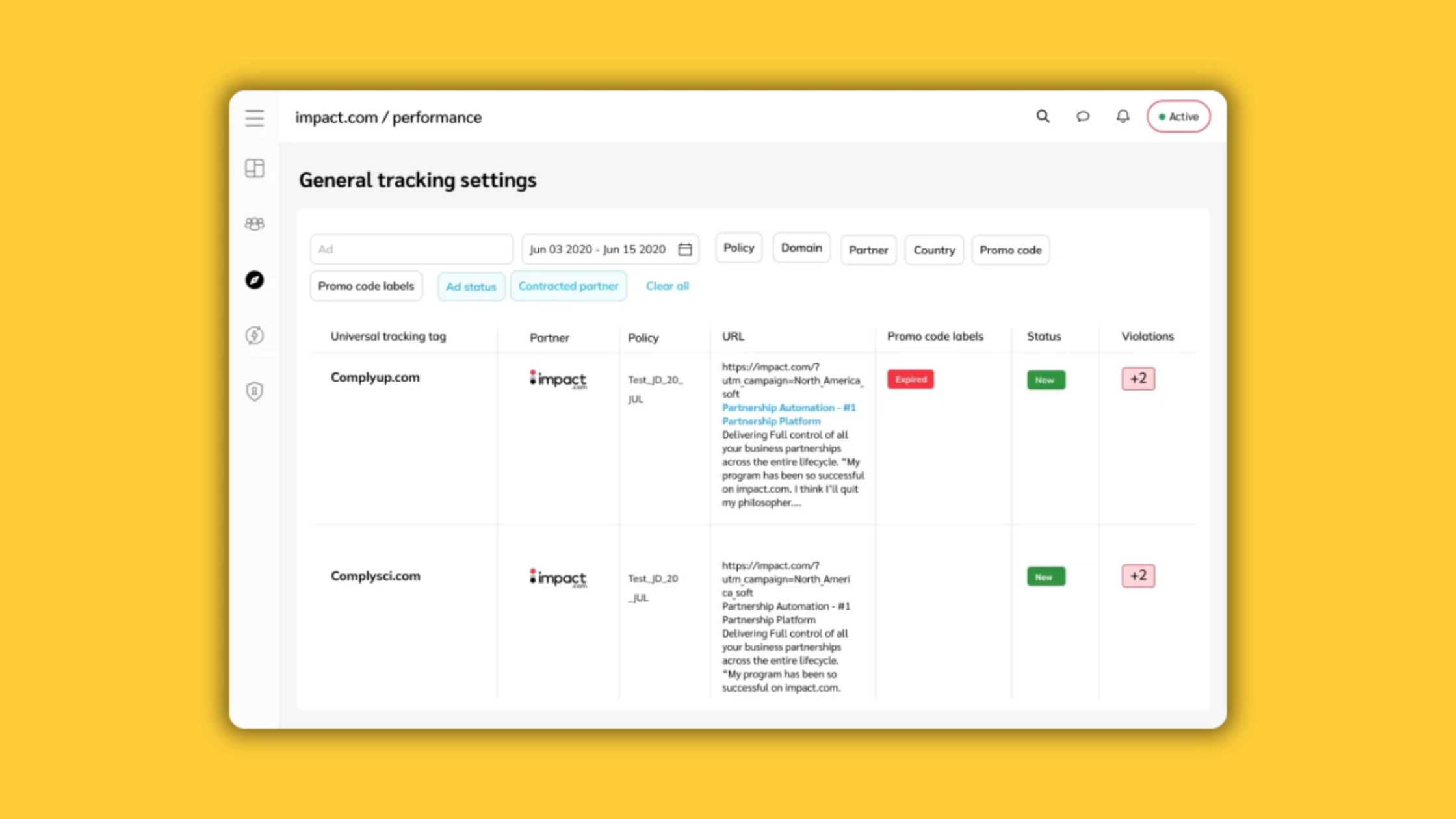
Future-proof your program with reliable tracking
✅ Automated payments and invoicing
- Multiple payout methods (ACH, PayPal, international transfers)
- Automated invoice generation
- Tax compliance and reporting
- Minimum payout thresholds and scheduling
Why it’s critical: Manual payment errors damage partner relationships and waste team time
✅ Basic fraud protection
- Click fraud detection
- Duplicate transaction prevention
- Suspicious activity alerts
- Partner verification processes
Why it’s critical: Undetected fraud can drain budgets and skew performance data
✅ Essential reporting
- Partner performance dashboards
- Revenue and conversion tracking
- Commission calculation accuracy
- Export capabilities for further analysis
Why it’s critical: You need visibility into program performance to optimize and scale
Important features (significant impact on efficiency and growth)
These features become increasingly important as your program grows:
✅ Partner discovery and recruitment tools
- Marketplace access to vetted partners
- AI-powered partner recommendations
- Automated outreach capabilities
- Application management workflows
When you need it: Essential for programs looking to scale beyond 100 partners

Accelerate the process of finding your next partner
✅ Advanced communication tools
- Automated email workflows
- Branded partner portals
- Newsletter and announcement systems
- Performance-based messaging triggers
When you need it: Critical when managing 50+ partners efficiently
✅ Compliance monitoring
- Brand mention tracking
- Paid search monitoring
- Content compliance checks
- Automated violation reporting
When you need it: Necessary when working with diverse partner types or in regulated industries
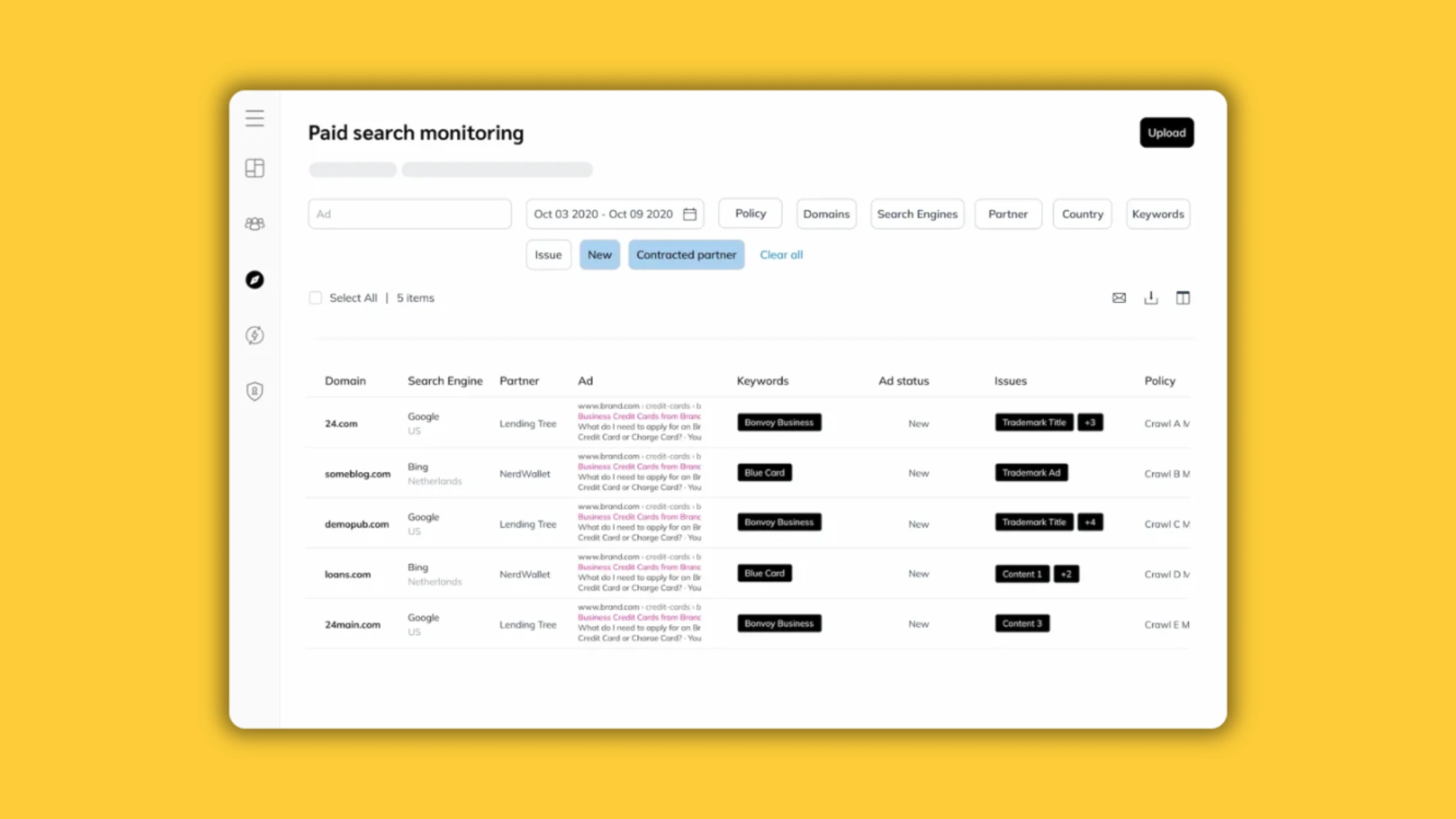
Safeguard your brand with full-funnel program protection
✅ Advanced analytics
- Custom dashboard creation
- Predictive performance insights
- A/B testing capabilities
- Cross-channel attribution analysis
When you need it: Valuable for established programs optimizing for growth
Nice-to-haves (competitive advantages and convenience features)
These features provide additional value but aren’t essential for core functionality:
✅ AI-powered optimization
- Automated bid adjustments
- Dynamic commission optimization
- Predictive partner scoring
- Smart budget allocation
When it adds value: For mature programs with substantial data and complex optimization needs
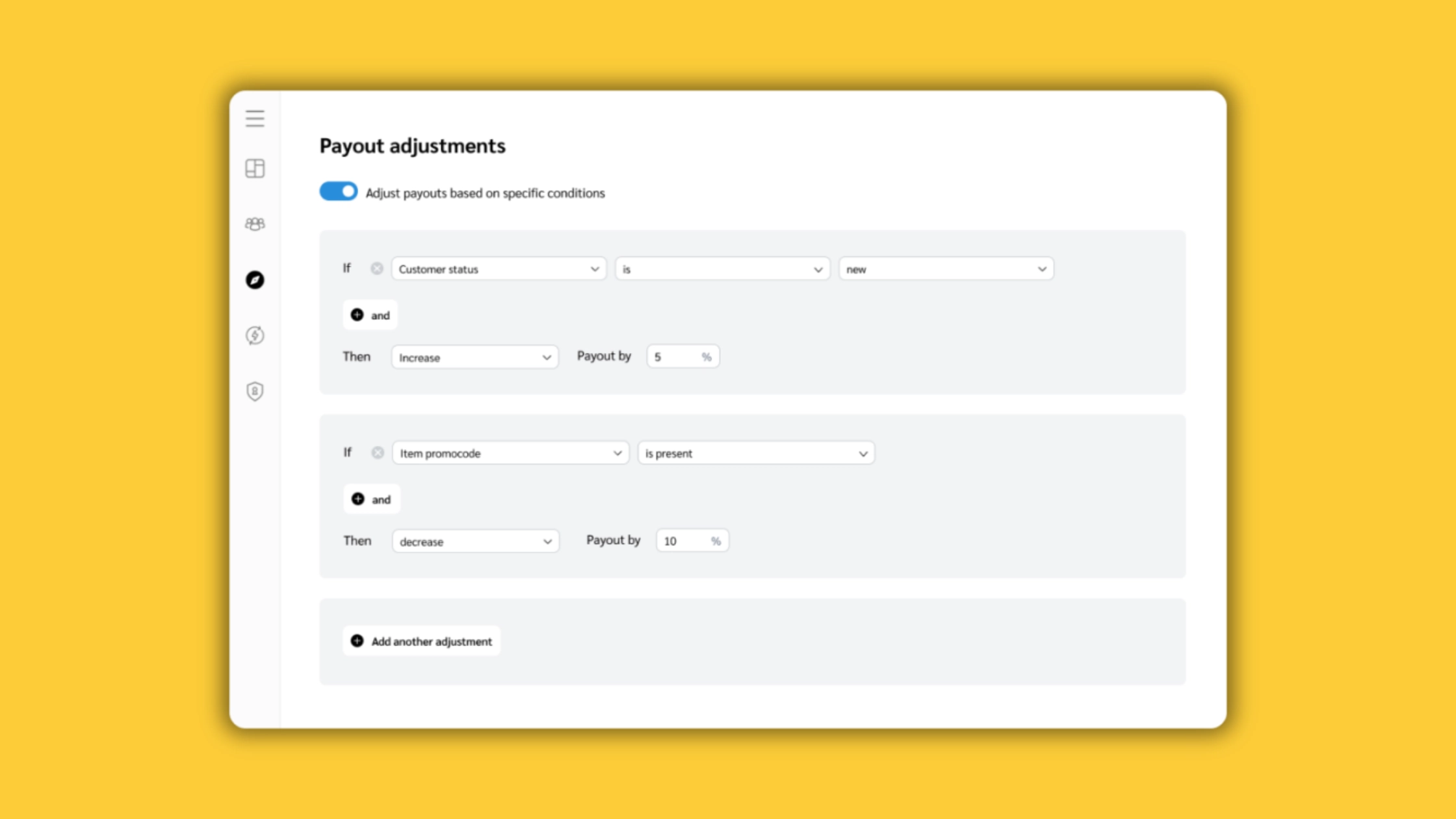
Create contracts and pay partners automatically
✅ White-label capabilities
- Fully branded partner portals
- Custom domain hosting
- Branded mobile apps
- Custom integration development
When it adds value: For enterprise programs wanting complete brand control
✅ Advanced integrations
- CRM synchronization
- Marketing automation platforms
- Business intelligence tools
- Custom API development
When it adds value: For companies with complex tech stacks requiring deep integration
✅ Global expansion features
- Multi-currency support beyond basics
- Regional compliance automation
- Localized partner experiences
- International tax optimization
When it adds value: For programs actively expanding into new geographic markets
2. Integration requirements
Having great features is useless if the platform can’t connect with your existing systems. Poor integration just creates a new set of manual data transfer tasks. This defeats the whole purpose of automation. So, assess integration upfront.
- API Integrations: The platform should offer robust API integrations with your existing tech stack. This creates real-time, bi-directional data flow between systems.
- Existing systems sync: Look for specific integration capabilities with your core business intelligence tools, CRM synchronization, and marketing automation platforms.
- Custom API development: For companies with highly complex or unique tech stacks, the ability to support custom API development is essential for deep integration.
Why it’s critical: Integration allows for accurate tracking across channels and keeps partner data consistently synchronized with your sales and marketing records.
3. Implementation considerations
Implementation involves assessing the platform’s support, transparency, and overall risk factors. Avoiding common red flags here protects your investment and maximizes your time to value.

Onboarding and support
- Dedicated support: The vendor should offer dedicated support during both the onboarding phase and ongoing use.
- Training: Look for comprehensive training for your team during implementation.
- Partner migration: For programs migrating from a legacy system, confirm the vendor offers a clear plan for hassle-free partner and data transfer to prevent revenue drop-offs during transition.
Financial and contract transparency
- Avoid red flags: Skip platforms that require long-term contracts without trial periods or easy exit clauses. Watch out for hidden fees for features that should be standard (like reporting or basic integrations).
- Proof of ROI: The vendor should demonstrate ROI with specific metrics from existing customers and provide references from similar-sized programs in your industry.
Scalability and customization
- Customization: The platform must support customization in key areas, such as tracking, reporting, and contracts, to adapt to your unique program needs.
- Global readiness: If you have or plan to have international partners, assess features like multi-currency support, regional compliance automation, and localized partner experiences.
Automation software solutions by program stage
When selecting a platform, the right choice depends on your current program size and the complexity of your needs. Here are platform examples organized by maturity and budget levels:
1. Early stage programs (0–50 Partners)
Solution examples: Tapfiliate / LeadDyno (Self-managed SaaS)
Why they fit: These focus purely on core tracking, automated payment processing, and link creation, offering low monthly subscription fees. This provides the foundational automation required for early growth and a quick ROI.
Pros:
- Cost-conscious: Low monthly fees, typically based on a fixed SaaS model.
- Easy setup: Quick integration with popular e-commerce platforms.
Cons:
- Limited discovery: Requires manual recruitment of partners.
- Basic features: Lacks advanced fraud prevention and deep analytics.
2. Growing programs (50–500 Partners)
Solution examples: CJ (Commission Junction) / Awin (Established Networks)
Why they fit: These platforms are ideal if your focus is scaling with traditional affiliate publishers. They provide a ready-made, large network of vetted partners, immediately resolving the discovery bottleneck.
Pros:
- Partner network: Immediate access to a massive, established base of publishers.
- Trusted payouts: Reliable payment systems for affiliates across the globe.
Cons:
- Affiliate-focused: Less suitable for managing diverse partners (influencers, B2B).
- Network fees: Often include a platform fee plus a percentage of affiliate earnings.
3. Enterprise programs (500+ Partners)
Solution examples: impact.com / PartnerStack (Partnership Management Platform)
Why they fit: This platform is designed to handle the complexities of diverse partner types (affiliates, influencers, B2B, mobile) on a single unified platform. It offers the enterprise-level capabilities needed to manage complexity and global scale.
Pros:
- Unified management: One platform to manage recruitment, contracts, and tracking for all partner types.
- Advanced automation: Dynamic Payouts, AI-driven insights, and sophisticated compliance monitoring.
- Scalability: Built for high-volume, global operations and complex integrations.
Cons:
- Higher fixed cost: SaaS-based subscription fees are higher, though ROI is typically strong.
- Requires effort: Requires effort to recruit and manage partners directly compared to a closed network.
Quick wins vs. Long-term automation investments
You don’t have to overhaul your entire system overnight. Start small, get immediate wins, and build toward powerful, long-term results. Here’s how you should prioritize your automation efforts.
Quick wins (High impact, low effort)
These are the changes you can make today. They save your team hours and provide instant improvements to partner satisfaction and program integrity. You’ll see a fast return on your time.
| Category | Specific action | Immediate outcome |
| Partner onboarding | Template contracts and links: Create ready-made templates for contracts and automatically generate unique tracking links for new partners upon signing. | Saves time: Cuts partner activation time from days to minutes. You don’t wait for legal or manually create links. |
| Finance | Automate payout thresholds: Set a minimum threshold (e.g., $50) before the system issues payment. | Saves money: You drastically reduce transaction fees for numerous small payments. |
| Fraud prevention | Set activity alerts: Turn on alerts for suspicious activities (e.g., 500 clicks in an hour with zero conversions). | Protects budget: You get instant notification of click fraud or faulty links, letting you pause the partner immediately. |
| Engagement | Welcome email sequence: Implement a simple automated email that sends a welcome message and links to your asset library immediately after a partner is approved. | Boosts activation: Partners know exactly where to start, reducing “ghosting” after sign-up. |
Long-term investments (Strategic, high complexity)
These investments need more planning and budget. But they deliver the best efficiency, profit, and growth that scales. They are essential for Established Stage programs.
| Category | Strategic investment | Long-term benefit |
| Profit maximization | Dynamic commissioning: Invest in a system that can adjust commission rates based on complex logic (e.g., Geo-location, device, customer lifetime value (CLV)). | Optimizes profit: You stop paying high commissions on low-value sales. You only reward behavior that drives maximum profit (e.g., 20 percent for first-time customers). |
| Recruitment | AI partner scoring and matching: Implement AI that analyzes the historical performance of your conversions and uses lookalike modeling to proactively identify and score prospects. | Accelerates quality growth: You move from finding any partner to finding the best partner. Your recruitment is constantly optimized for future revenue. |
| Compliance and brand safety | Automated search Engine Monitoring (SEM): Deploy tools that continuously scan paid search results and partner websites for trademark violations or unauthorized coupon codes. | Protects revenue: You prevent partners from bidding on your brand name, ensuring your own paid search efforts remain profitable. It protects your brand integrity 24/7. |
| Data and visibility | Cross-channel/Multi-touch attribution: Integrate the platform with your CRM and BI tools to view the partner program’s contribution alongside your other marketing channels (PPC, Social). | Proves true roi: You move past last-click attribution. You understand the partner’s influence early in the customer journey, providing the data needed to justify massive budget increases. |
Frequently Asked Questions (FAQs)
What is a performance marketing platform?
A performance marketing platform is a technology solution that provides the tools you need for performance-based campaigns. The platform focuses on accurate tracking, automated payments, and fraud protection. It centralizes data and automates admin tasks so you can spend more time on strategic growth.
What is marketing automation?
Marketing automation uses software to handle repetitive marketing tasks. In performance marketing, this includes automating partner discovery, contract creation, commission payments, fraud monitoring, and personalized partner communication.
How do I choose marketing automation software?
Choose software by evaluating against three key pillars, tailored to your program’s maturity (Early, Growing, Established):
- Features: Make sure must-haves like accurate tracking, automated payments, and basic fraud protection are present. Look for features that match your current growth stage.
- Integration: The platform needs robust API integrations with your existing tech stack (CRM, BI tools) to create real-time data flow and prevent new manual tasks.
- Implementation: Look for dedicated support, clear partner migration plans, contract transparency (avoid hidden fees), and a vendor who can show ROI from similar-sized programs.
What are the benefits of marketing automation?
The key benefits of marketing automation in performance programs include:
- Maximizing strategic time: Reduces manual task time by up to 40 percent (Scrambly cut reporting from 3 hours to 30 minutes), freeing teams for high-impact strategy.
- Accelerated scale and growth: Enables high-quality partner recruitment without a proportional increase in headcount (PUMA saw 2x active partner growth).
- Eliminating revenue leakage: Provides precise tracking, accurate partner attribution, and proactive fraud prevention—protecting profits and ensuring correct compensation.
- Driving optimization: Centralizes data for real-time reporting, giving you granular, actionable insights for strategic decisions and proving ROI to leadership.
Your roadmap from bottleneck to scale
The resource challenge is real. But it doesn’t have to limit your potential.
By setting up strategic automation, your program shifts from being stuck in repetitive manual tasks to operating as a reliable, scalable operation. This guide has shown that the automation advantage delivers significant, measurable results:
- Frees up strategic time: Managers can focus on high-level strategy instead of admin tasks.
- Accelerates partner growth: Programs can scale their partner network without proportional increases in headcount.
- Ensures accurate tracking: Automation eliminates errors, prevents revenue leakage, and guarantees reliable conversion attribution.
The path to scale is clear. Adopt a framework tailored to your program’s maturity—one that directly addresses your key bottlenecks, whether they involve partner recruitment, financial management, proving ROI, or preventing fraud.
What’s your next step?
If you’re under 50 partners: Start with tracking and automated payments. Get the foundation right before adding complexity.
If you’re at 50–500 partners: Add recruitment automation and triggered partner communications. Focus on scaling without proportionally scaling your workload.
If you’re over 500 partners: Look at AI-driven partner matching, dynamic commissions, and advanced fraud protection. You need enterprise capabilities to handle complexity and global growth.
For brands ready to handle complexity, impact.com provides the necessary platform—a single, powerful system for managing all diverse partner types, from affiliates to influencers. You get advanced tools like dynamic commission models and AI-driven insights, with enterprise capabilities built for global growth.
Ready to implement the automation framework necessary to scale your partnerships with confidence? Request a demo to see how impact.com can convert your limited resources into your greatest growth advantage.
Find your edge and accelerate your program with deep-dive performance marketing tactics in more impact.com blogs:
law
Berita Olahraga
Lowongan Kerja
Berita Terkini
Berita Terbaru
Berita Teknologi
Seputar Teknologi
Berita Politik
Resep Masakan
Pendidikan
Berita Olahraga
Berita Olahraga
News
Berita Terkini


